
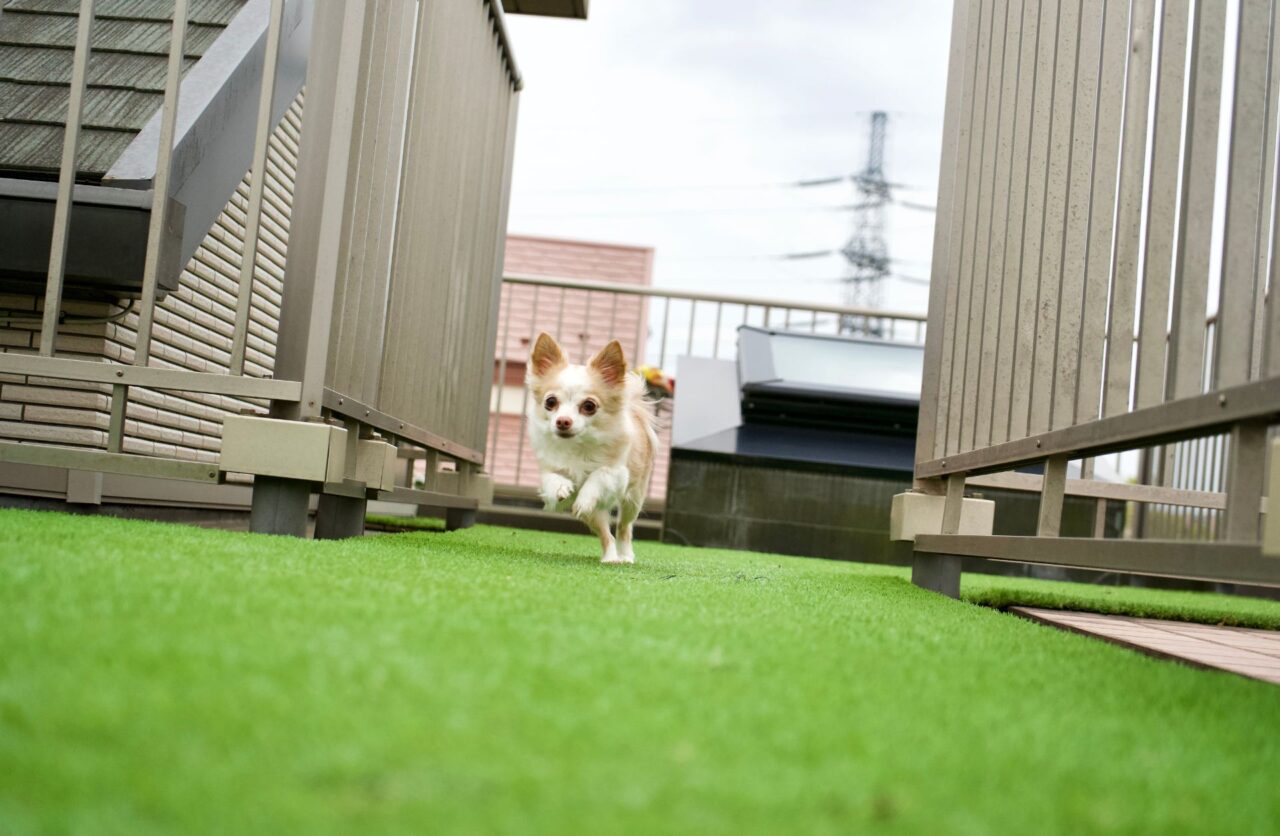
Pet-friendly artificial turf in Toronto solves the two things dog owners hate most: muddy paws and the yellow dead patches a real lawn gets from urine. The short answer is yes, artificial grass is excellent for dogs, as long as it is installed with the right drainage and infill. This guide covers how pet turf handles dogs, drainage, and odour control across GTA yards, from a fenced Riverdale backyard to a larger run in Vaughan. The Toronto Turf Pros team installs pet lawns often, so the advice here comes from real yards.
Is artificial turf good for dogs?
Yes. Artificial turf is one of the best surfaces for dogs because it drains quickly, does not turn to mud, and cannot be dug up or worn into bare patches. Dogs cannot tear holes in a properly installed lawn the way they do with sod, and there is no dirt to track into the house after a rainy Toronto spring. The blades are soft enough for paws, and quality pet turf uses non-toxic, lead-free fibres so it is safe for animals that lick and lie on the surface. For most GTA households with active dogs, it ends the endless cycle of reseeding and repairing.
How does drainage work for pet turf?
Drainage is the whole game with pet turf, and it starts under the grass. A pet-ready install uses a perforated backing on the turf sitting over a compacted, free-draining aggregate base, so both rain and dog urine pass straight through instead of pooling. This matters in the GTA because much of the region, especially north of the 401 in Markham, Brampton, and Vaughan, sits on heavy clay that drains slowly on its own. A good crew accounts for that by building a deeper, more open base under a dog area than under a decorative lawn. The result is a surface that is dry and usable again minutes after a downpour.
Controlling odour
Odour control comes down to two things: drainage and infill. Because urine drains through pet turf rather than sitting in soil, most of it simply flushes away, especially with regular rain or a quick rinse. For the ammonia smell that can build up in a heavily used dog spot, the fix is an antimicrobial infill such as a zeolite product, which traps and neutralizes odour compounds between the blades. In a small, enclosed downtown backyard with limited airflow, that infill plus an occasional rinse with an enzyme cleaner keeps things fresh even in humid Toronto summers. Larger, open yards in the suburbs usually need even less attention.
Cleaning and upkeep
Keeping a pet lawn clean is simple. Pick up solid waste as you would on any surface, then hose the spot down. A weekly rinse of high-use areas and a periodic enzyme treatment handle the rest. There is no mowing, no muddy wear paths along the fence line, and no fertilizer for a curious dog to eat. Brushing the fibres now and then keeps them upright in the lanes where your dog runs the same route every day. Compared with patching a chewed-up natural lawn every spring, the upkeep is minimal.
Heat and summer comfort
Artificial grass warms up in direct summer sun, which is worth planning for since GTA heat waves can be intense. On the hottest afternoons the surface can feel warm to paws, so a quick rinse cools it fast, and a shaded corner gives your dog somewhere comfortable. Lighter-coloured infills and a spot of tree shade, common in older Toronto neighbourhoods, both help. For most of the year the temperature is a non-issue, and the tradeoff of a clean, mud-free yard is one nearly every dog owner takes.
Dog runs and small city backyards
Not every home needs a full lawn converted. In a narrow downtown backyard in Leslieville or Parkdale, a dedicated turf dog run along the side of the house keeps the muddy zone contained while the rest of the yard stays patio or garden. The same permeable base and odour-control infill apply, just over a smaller footprint. In larger suburban yards in Ajax or Whitby, homeowners often turf the whole play area so kids and dogs share one clean, durable surface. Either way the build is tuned to how the animals actually use the space.
Getting the install right
A pet lawn only performs if it is built for pets from the base up. That means the free-draining aggregate, a securely fastened perimeter so a digger cannot lift an edge, a durable turf with a permeable backing, and the right odour-control infill. It is the same care we bring to a general backyard turf project, with the drainage and infill tuned for animals. If you are choosing between a full-yard conversion and a dedicated run, our pet-friendly turf service can spec either for your property.
Frequently asked questions
Will dog urine ruin artificial turf?
No. Urine drains through the permeable backing and aggregate base instead of soaking in, and an antimicrobial infill controls odour. Unlike sod, turf will not develop yellow dead patches from a dog.
Can my dog dig up artificial grass?
Not when it is installed properly. The turf is fastened securely at the perimeter and seams, so there is no loose edge for a dog to grab, and there is no exposed soil underneath to dig into.
How do I stop pet turf from smelling in summer?
Use a zeolite-based infill, rinse high-use spots regularly, and apply an enzyme cleaner now and then. Good drainage does most of the work by flushing urine through rather than trapping it.
Book a pet turf quote in the GTA
Ready for a clean, mud-free yard your dog will love? Call (647) 559-1722 or request a free estimate and our GTA team will design a pet-ready lawn built for drainage and odour control.